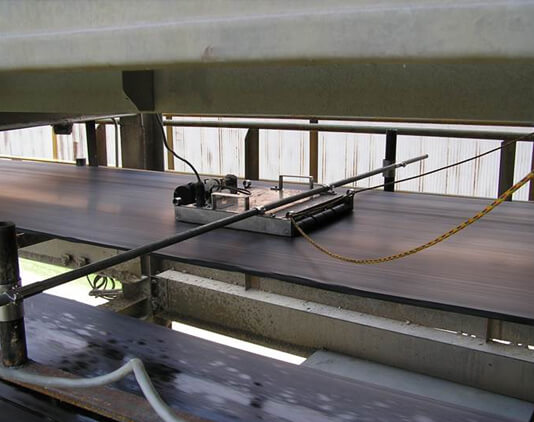
LRM XXI Conveyor Belt Diagnostic System
The LRM XXI conveyor belt diagnostic system monitors steel-cord conveyor belts during operation.
The LRM®XXI Conveyor Belt Diagnostic System aims to identify the most weakened section of the conveyor belt by detecting defects in wire ropes cord.
The regular conveyor belt testing allow the prediction of estimated work time and the replacement of the most weakly section of conveyor belt in which fatigue defect in steel cord has been detected.
Laboratory LRM-NDE offers portable device to carried out the conveyor belt inspection or device dedicated for one installation that in a continuous manner the inspection of installation is performed.
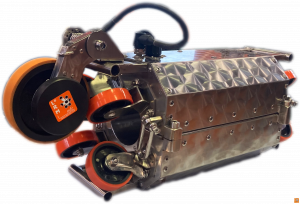
The Measuring Heads MH-400 & MH-600 are designed for Non-Destructive inspection of steel cords during operation of the conveyor belt.
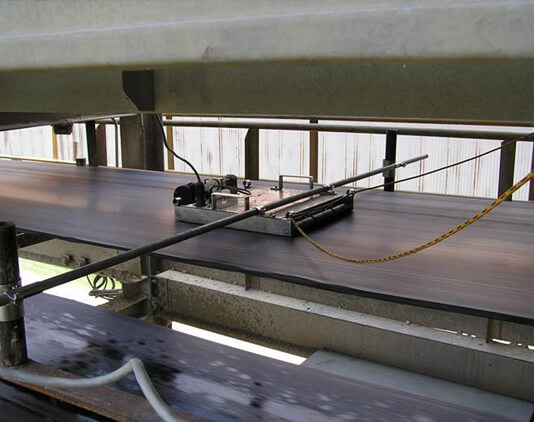
The LRM®XXI Diagnostic System inspects the Conveyor Belt at speed even up to 10 m/s from the running side on a possibly flat section without disrupting the conveyor belt work.
The LRM®XXI Conveyor Belt Diagnostic System includes Measuring Heads (designed to the customer requirments),
LRM®XXI Recorder prepared for harish enviroment with, self battery supply for over 8h, IP67 protective level),
LRM® Diagnostic Software for the visualization in real time of the collected data from LRM®XXI Recorder, which is easy and intuitive to use) and necessary accessories.
Conveyor Belt data analyst services
As a manufacturer of a world-class Non-destructive Testing Equipment we offer Conveyor Belt data analyst services.
For special customer requirements our inspectors that have level III in MFL method (certificate of competence in NDT according to ISO 9712) evaluate the collected data, prepare and issue the Conveyor Belt report with recommendations.
If you do not have an experience in wire rope Examination we teach you how to collect the data and our company will provide the Conveyor Belt data analyst service for you.
Applications of the LRM XXI conveyor belt
The LRM XXI conveyor belt diagnostic system is designed for non-destructive inspection of steel cord conveyor belts used in mining, seaports, power generation, cement plants, and other heavy industries where belt failure means costly downtime.
Its purpose is to identify the most weakened section of the conveyor belt by detecting fatigue defects in the steel cord, so regular testing allows operators to predict the estimated remaining work time and replace the weakest section before it fails.
The LRM XXI conveyor belt system performs the inspection during normal operation at speeds of up to 10 m/s from the running side, without disrupting conveyor work, and a dedicated device can monitor one installation continuously.
For customers without wire rope examination experience, the manufacturer teaches data collection and offers conveyor belt data analyst services, where inspectors certified to Level III in the MFL method under ISO 9712 evaluate the collected data and issue a report with recommendations.
LRM XXI conveyor belt key features
- The LRM XXI conveyor belt system detects defects in the steel cord wire ropes to identify the most weakened section of the belt and predict its estimated work time.
- Inspection runs at belt speeds of up to 10 m/s from the running side on a possibly flat section, without disrupting conveyor belt work.
- Measuring heads MH-400 and MH-600 are purpose-designed for non-destructive inspection of steel cords during conveyor operation.
- The LRM XXI conveyor belt recorder is prepared for harsh environments, with an IP67 protection level and a self-contained battery supply lasting over 8 hours.
- LRM diagnostic software provides real-time visualization of the collected data through an easy and intuitive interface.
- Measuring heads are designed to customer requirements; the laboratory offers a portable device for inspections or a dedicated device for continuous monitoring of one installation.
- Optional conveyor belt data analyst services: inspectors certified to Level III in the MFL method under ISO 9712 evaluate the collected data, prepare and issue a report with recommendations, and train teams that lack wire rope examination experience.
Related instruments: steel wire rope diagnostic systems.